




Why Do Sidewalks Sink? Causes, Risks, and Repair Options
A sunken sidewalk is more than an uneven piece of concrete. When one section of a sidewalk settles lower than another, it is often a sign that the soil beneath the slab has shifted, eroded, or can no longer provide uniform support.
Sidewalk settlement can happen gradually, making it easy to overlook at first. Over time, however, uneven concrete can create trip hazards, interfere with drainage, and allow water to collect or flow toward areas where it shouldn’t.
Understanding why sidewalks sink is the first step toward determining the right way to address the problem.
Why Do Concrete Sidewalks Sink?
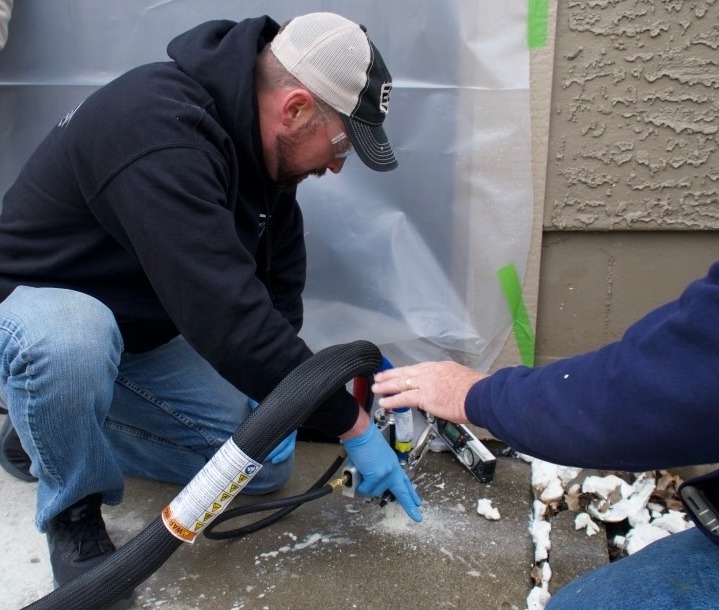
Concrete is heavy and depends on the soil beneath it for support. When that supporting soil changes, the concrete above it can move as well.
Several conditions can contribute to a sinking or uneven sidewalk.
Soil Erosion
Water moving beneath or alongside a sidewalk can gradually wash away supporting soil. As voids develop beneath the concrete, portions of the slab may no longer have adequate support and can begin to settle.
Drainage problems, runoff, leaking water lines, and poorly directed downspouts can all contribute to excess water around concrete.
Poorly Compacted Fill Soil
Before a sidewalk is installed, the soil beneath it should be properly prepared and compacted. If fill soil was not adequately compacted during construction, it may compress naturally over time.
As the soil settles, a gap can form between the ground and the concrete above it, allowing the sidewalk to sink.
Water and Drainage Problems
Water is one of the most important factors to consider when investigating concrete settlement.
Improper grading can direct water toward sidewalks rather than away from them. Downspouts can also discharge large amounts of roof runoff near concrete surfaces. Repeated saturation can affect the supporting soil and contribute to erosion or movement beneath the slab.
A sidewalk that slopes toward a home after settling can create an additional concern by directing water toward the foundation.
Seasonal Soil Movement
Properties in South Dakota, Wyoming, and Nebraska experience significant seasonal temperature changes. Freezing temperatures, snowmelt, precipitation, and changes in soil moisture can all affect the ground surrounding concrete.
Freeze-thaw cycles can contribute to movement in soils and concrete, while repeated changes in moisture can cause certain soils to expand, contract, or lose support.
Changes in the Surrounding Property
Construction, landscaping changes, drainage modifications, tree growth, and other changes around a property can sometimes affect the soil or water movement surrounding a sidewalk.
For this reason, identifying the cause of settlement can be just as important as identifying the sunken slab itself.
Signs Your Sidewalk May Be Settling
A sidewalk does not have to be badly cracked to have a settlement problem. In fact, an otherwise intact slab can sometimes sink or tilt when the soil beneath it loses support.
Signs to watch for include:
- One sidewalk slab sitting lower than the adjoining slab
- An uneven transition between concrete sections
- Concrete that slopes noticeably to one side
- Water pooling on or alongside the sidewalk
- New or widening gaps between slabs
- Concrete pulling away from steps, porches, driveways, or other surfaces
- Cracks accompanied by changes in slab elevation
- A sidewalk that has begun directing water toward a building
Changes that continue to worsen over time can be particularly important because they may indicate that movement beneath the concrete is ongoing.
Why Should a Sunken Sidewalk Be Repaired?
The most obvious concern with an uneven sidewalk is the potential for a trip hazard. A raised edge or sudden change in elevation can make a walking surface more difficult to navigate.
Settlement can create other problems as well.
A sidewalk that no longer has the intended slope may collect water or redirect runoff. Gaps and uneven surfaces can also make snow removal more difficult and allow additional water to reach the soil beneath the concrete.
Addressing the problem may therefore involve more than improving the sidewalk’s appearance. The condition of the concrete, drainage around it, and reason for the settlement should all be considered.
Can a Sunken Sidewalk Be Repaired?
In many situations, yes. A sunken sidewalk does not automatically need to be removed and replaced.
The appropriate repair depends on factors such as:
- The condition of the existing concrete
- The amount of settlement
- Whether the slab is severely cracked or deteriorated
- The condition of the supporting soil
- The source of erosion or water problems
- Whether movement appears to be continuing
- The location and accessibility of the affected concrete
When the concrete itself remains in relatively good condition, a lifting or leveling method may be an option. If the slab is extensively cracked, deteriorated, or otherwise damaged, replacement may make more sense.
The underlying cause should also be considered. Simply correcting the elevation of a sidewalk without addressing an ongoing drainage or erosion problem may leave the conditions that contributed to settlement in place.
Concrete Lifting vs. Concrete Replacement
Both repair and replacement have their place. The better option depends on the condition of the sidewalk and what caused it to move.
| Consideration | Concrete Lifting/Leveling | Concrete Replacement |
|---|---|---|
| Existing slab condition | Often best suited to structurally sound concrete | May be appropriate for badly cracked or deteriorated concrete |
| Amount of disruption | Typically less disruptive | Requires removal and installation of new concrete |
| Existing concrete | Preserves the current slab | Existing slab is removed |
| Project time | Often completed relatively quickly | Requires demolition, installation, and curing time |
| Underlying conditions | Cause of settlement should still be evaluated | Site preparation and underlying conditions should be addressed before new concrete is installed |
| Best choice | Depends on slab and site conditions | Depends on slab and site conditions |
A professional evaluation can help determine whether an existing sidewalk is a good candidate for repair or whether replacement is the more practical long-term approach.
Does a Sunken Sidewalk Mean You Have Foundation Problems?
Not necessarily.
Sidewalk settlement by itself does not mean a home’s foundation is failing. Sidewalks and foundations are different structures with different loads and support requirements.
However, some of the conditions that contribute to sidewalk settlement can also affect other parts of a property. Poor drainage, erosion, changing soil moisture, and soil movement can occur around both concrete flatwork and foundations.
If a sinking sidewalk is accompanied by symptoms such as foundation cracks, sticking doors or windows, uneven floors, wall movement, or other changes to the home, those concerns should be evaluated separately.
The important distinction is that a sunken sidewalk can provide information about conditions around the property, but it should not be treated as proof of a foundation problem.
How Can You Help Prevent Sidewalk Settlement?
Not every cause of concrete settlement can be prevented, but controlling water around your property is an important place to start.
Pay attention to:
- Downspouts: Direct roof runoff away from sidewalks and other concrete when possible.
- Grading: Soil should encourage water to move away from structures rather than collect alongside them.
- Pooling water: Repeated standing water near concrete may indicate a drainage issue that deserves attention.
- Gaps around concrete: Areas where soil has washed away or separated from the slab may allow additional water beneath it.
- Developing settlement: Keep an eye on uneven areas to determine whether they appear to be getting worse.
Correcting drainage problems early may help reduce continued erosion and protect other areas of the property as well.
When Should You Have a Sunken Sidewalk Evaluated?
Consider having the area evaluated when the sidewalk has developed a significant elevation difference, presents a trip hazard, continues to move, affects drainage, or begins directing water toward your home.
An evaluation can help answer two important questions: Why did the sidewalk sink, and what repair approach makes sense for its current condition?
Rapid Foundation Repair serves property owners throughout South Dakota, Wyoming, and Nebraska. Our team can evaluate concrete and surrounding site conditions to help determine an appropriate next step.
Request a free estimate to have your property evaluated.
Frequently Asked Questions About Sunken Sidewalks
Why is my sidewalk sinking?
Sidewalks commonly sink when the soil beneath the concrete settles, erodes, or otherwise loses its ability to support the slab evenly. Poor soil compaction, drainage problems, water infiltration, and seasonal soil movement can all contribute to settlement.
Can a sunken sidewalk be repaired without replacing it?
Sometimes. If the existing concrete is structurally sound, it may be possible to lift or level the slab rather than remove it. Concrete that is severely cracked, deteriorated, or otherwise damaged may be a better candidate for replacement. The cause and extent of settlement should also be considered before choosing a repair.
Will a sunken sidewalk continue to sink?
It can. If erosion, drainage problems, unstable soil, or another underlying condition continues, additional movement may occur. This is why determining what contributed to the settlement is an important part of evaluating the problem.
Is a sinking sidewalk a sign of foundation problems?
Not necessarily. A sunken sidewalk alone does not indicate foundation failure. However, drainage problems, erosion, and soil movement can affect multiple areas of a property. If you notice foundation-related symptoms in addition to sinking concrete, the foundation should be evaluated separately.
Should I lift or replace my sunken sidewalk?
The answer depends largely on the condition of the existing concrete and the cause of the settlement. Structurally sound slabs may be candidates for lifting or leveling, while severely damaged concrete may require replacement. An evaluation can help determine which approach is appropriate for the specific conditions on your property.