




Home > Basement Waterproofing > Interior Drainage
Interior Drainage System Installation in South Dakota, Wyoming, and Nebraska
Waterproofing Solutions by Rapid Foundation Repair
Many homes in the U.S. experience water drainage problems. Understanding the cause and finding the solution is important. Most basements are connected to the house, which means they “share the air.” Some homes use their underground area as a finished living and bedroom space where moisture problems are not only uncomfortable and annoying but can also lead to health problems.
Mildew and mold can grow under wall coverings and carpeting. Finishing a basement without dealing with moisture can lead to significant damage as well. A sealed interior basement waterproofing system, installed by a professional, can keep the moisture and soil gases from circulating throughout your home.
What Are Interior Drainage Systems?
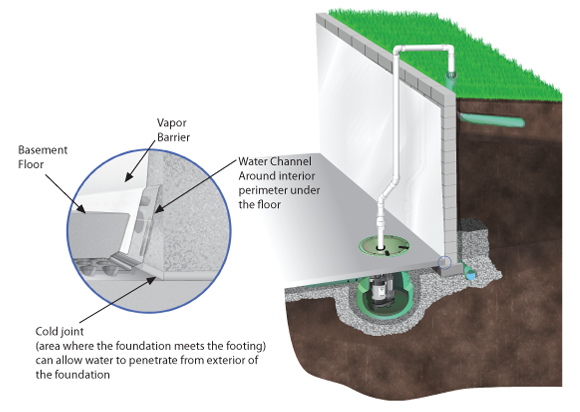
Sealed interior drain tile systems are designed for residential waterproofing and moisture control. It is essential that these be installed correctly since they are buried beneath the basement floor and cannot be corrected or modified easily. This interior system is less expensive and less invasive than exterior waterproofing. An interior drain system is not waterproofing. They are water management agents that relieve excess water from around and under the foundation and direct it to the sump pump system.
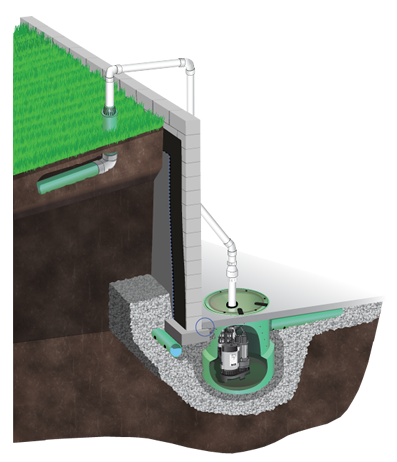
The most effective of the interior drainage systems is a perforated drain pipe installed inside the perimeter of the footing. These are building code approved when installed and sealed correctly. In order to do this, it is necessary to remove the concrete adjacent to the basement’s exterior walls. The drain pipe is then laid around basement’s perimeter at a grading where it drains into the sump pit. Weep holes are drilled so that water that has infiltrated the basement walls will follow the path of least resistance and drain into the drainage pipe.
This pipe then connects to the sump basin. The sump basin should have a sealed, airtight, childproof cover. There will be a plastic liner at the base of the wall into the drainpipe that is dimpled, which permits free drainage at the base of the wall. After all of the components are installed, new concrete is laid around the basement’s perimeter, repairing the slab floor.
As with all of our supplies and methods, it’s important to evaluate which method and materials are going to provide protection to your home for many years to come. Soil conditions and locations are a big factor in what solution is right for your situation. Rest assured that we will find the basement waterproofing solution that will repair what you already have or prevent water problems from arising. We pride ourselves in offering a wide array of solutions to protect your basement from water or to solve the basement water problem in your home.
Need Interior Waterproofing Installed in the Rapid City, Pierre, SD or Casper, WY Area? Call Rapid
We strive to find affordable and individualized solutions for your particular situation. Our professional team has installed thousands of systems throughout Rapid City, South Dakota and the surrounding area. It is our desire to serve our customers with high integrity and expertise. Contact us today in the Rapid City, South Dakota region for a personal consultation, professional advice, and quality workmanship.