




Should a Sump Basin Be Perforated?
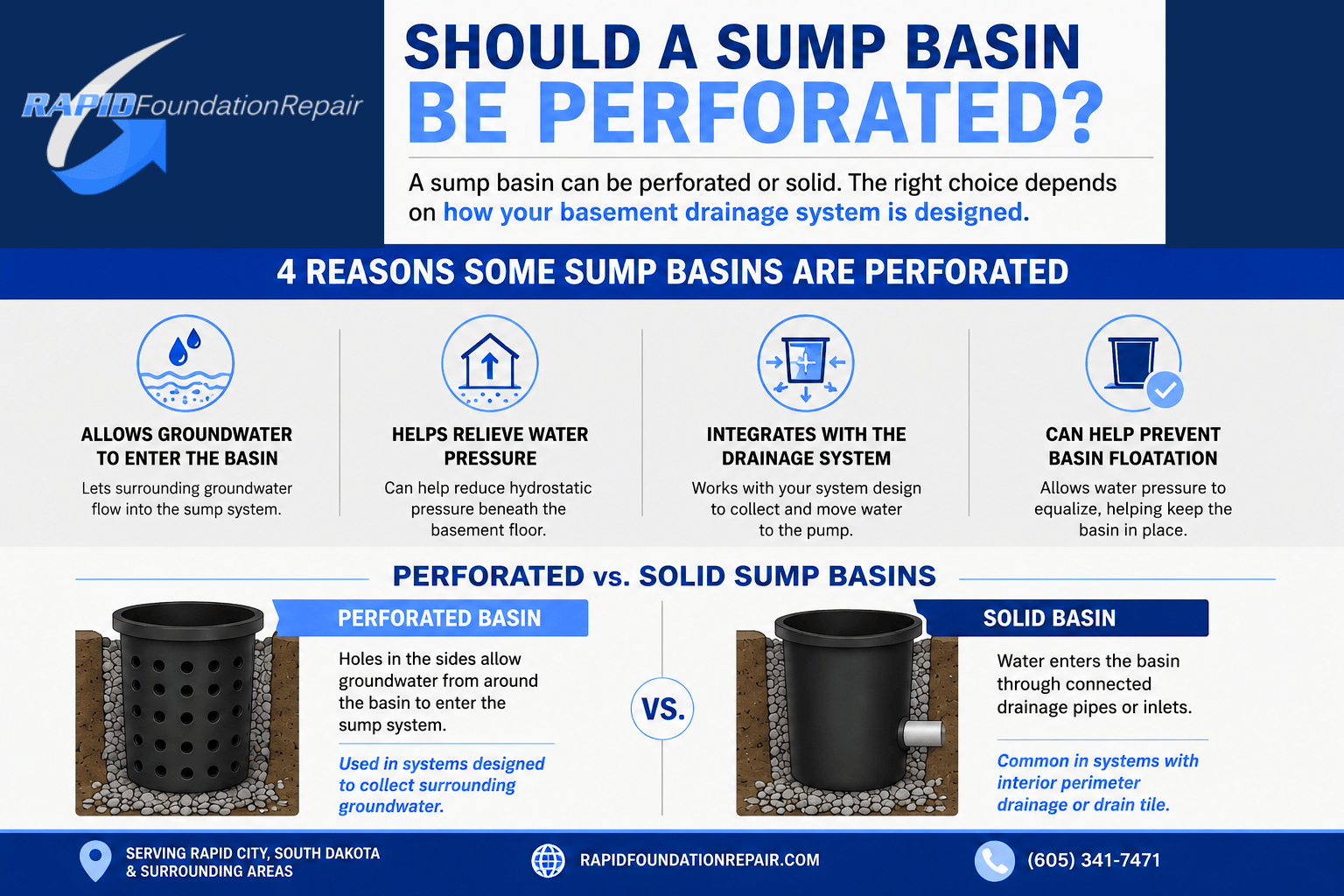
A sump basin can be perforated or solid, and the right choice depends on how your basement drainage system is designed. A perforated sump basin allows groundwater surrounding the basin to enter the sump system, while a solid basin typically receives water through connected drainage pipes or other designated inlets.
So, does your sump basin need holes? Not necessarily.
Perforations can be useful when the waterproofing system is designed to collect groundwater from around or beneath the basin. In other systems, perimeter drainage or drain tile already collects water and directs it into the basin, making additional perforations unnecessary.
The important question isn’t simply whether a sump basin should have holes. It’s how water is supposed to enter and move through your home’s entire basement drainage system.
Quick Answer: Should a Sump Basin Have Holes?
A sump basin should be perforated when perforations are part of the drainage system’s design for collecting surrounding groundwater. However, not every sump basin needs to be perforated.
The appropriate setup depends on factors such as how groundwater is being collected, whether the basin is connected to an interior drainage system, and the conditions beneath and around the basement floor.
If you already have a sump basin and are wondering whether you should drill holes into it, don’t modify the basin without first understanding how your existing drainage and waterproofing system is designed to work.
What Is a Sump Basin?
A sump basin—sometimes called a sump pit or sump crock—is the container installed below the basement floor that collects water so a sump pump can remove it from the home.
The basin itself doesn’t pump water. Instead, it provides a collection point for groundwater and water captured by the home’s drainage system.
As water enters the basin and rises to a predetermined level, the sump pump activates and pumps the collected water through a discharge line to an appropriate location outside the home.
A properly designed sump system therefore involves several components working together:
Drainage system → sump basin → sump pump → discharge line → water directed away from the home
Understanding that sequence helps explain why the design of the sump basin matters.
What’s the Difference Between a Sump Basin and a Sump Pump?
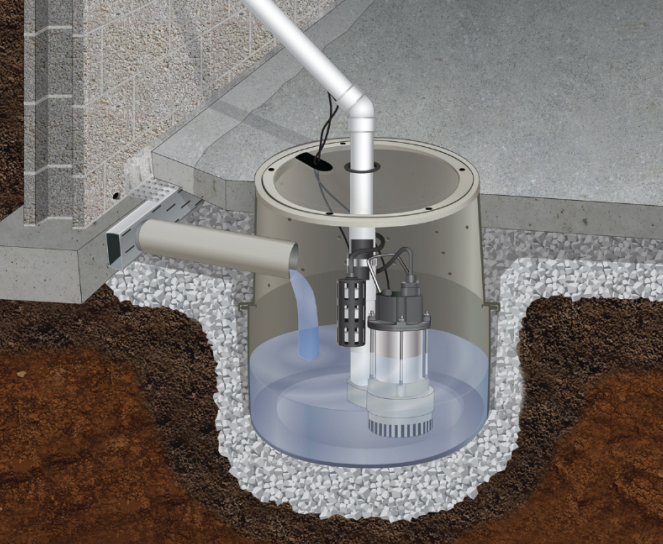
Homeowners sometimes use “sump pump” to describe everything inside the sump pit, but the pump and basin perform different jobs.
The sump basin collects water.
The sump pump removes the collected water.
The drainage system is responsible for directing unwanted water toward the basin, while the discharge system carries the pumped water away from the house.
All of these components need to work together. A powerful sump pump won’t solve a basement water problem if water can’t reach the basin effectively, just as an effective drainage system won’t keep the basement dry if the pump can’t reliably remove the water it collects.
That’s why basement waterproofing should be considered as a system rather than simply a collection of individual products.
What Is a Perforated Sump Basin?
A perforated sump basin contains openings that allow water surrounding the basin to enter it.
Depending on how the system is installed, these openings can allow groundwater from beneath or around the basement floor to move into the sump basin, where the sump pump can then remove it.
A solid sump basin doesn’t provide the same direct pathway through its walls. Instead, water typically enters through pipes or other designated openings connected to the drainage system.
Neither design is automatically better.
The correct basin depends on where the unwanted water is coming from and how the waterproofing system is designed to collect it.
Why Do Some Sump Basins Have Holes?
The primary purpose of perforations is to provide a pathway for surrounding groundwater to enter the sump system.
Water doesn’t always reach a basement through an obvious leak. Groundwater can accumulate beneath and around a basement floor, particularly during periods of heavy precipitation, snowmelt, or elevated groundwater conditions.
A properly designed drainage system gives that water a controlled path to follow.
In systems designed to use a perforated basin, water surrounding the sump pit can enter through the openings, collect in the basin, and be removed by the sump pump rather than remaining beneath or around the basement floor.
Perforations aren’t simply extra holes added to a container. They’re part of how certain drainage systems are designed to manage groundwater.
Does Every Sump Basin Need to Be Perforated?
No.
This is one of the most important distinctions to understand.
Some basement waterproofing systems use interior perimeter drainage or drain tile to collect groundwater and direct it into the sump basin. In these installations, the drainage system itself provides a path for water to reach the basin.
Other systems may be designed so that surrounding groundwater can enter through perforations in the basin as well.
The correct configuration depends on the drainage design, groundwater conditions, and other characteristics of the home.
That’s why choosing between a perforated and solid sump basin shouldn’t be based on the assumption that more holes mean better drainage.
The goal is to create a system in which unwanted water is collected effectively and safely discharged away from the home.
How Does Water Get Into a Sump Basin?
Water can reach a sump basin in different ways depending on the home’s drainage and waterproofing system.
One common method is through an interior perimeter drainage system. Water collected along or beneath the basement floor is directed through drainage channels or piping toward the sump basin.
In a system designed around a perforated basin, surrounding groundwater may also enter directly through openings in the basin.
Some installations may use a combination of drainage components to collect water and direct it to the sump.
Regardless of the method, the objective is the same:
Collect unwanted water before it becomes a basement water problem, move it into the sump basin, and pump it safely away from the home.
If water is entering your basement but isn’t reaching the sump basin, the issue may involve more than the pump itself. The drainage system that is supposed to collect and transport the water should also be evaluated.
Should I Drill Holes in My Existing Sump Basin?
If your existing sump basin isn’t perforated, don’t assume that drilling holes into it will improve your basement waterproofing.
Changing the basin can alter how groundwater and surrounding material enter the sump system. More importantly, an existing solid basin may have been installed as part of a drainage system that already directs water into it through another method.
If you’re seeing water around the sump pit, beneath the basement floor, or elsewhere in the basement, the better question is:
Why isn’t the existing system managing the water effectively?
The problem could involve drainage, the sump basin, the pump, the discharge system, exterior water management, or a combination of conditions.
A professional evaluation can help identify the source of the problem before changes are made to the system.
Signs Your Sump Pump System May Need Attention
A sump pump doesn’t need to wait until it completely stops working before it’s worth evaluating.
Consider having your sump and drainage system checked if you notice:
- Water entering the basement despite having a sump pump
- Water collecting around the sump pit
- A sump pump that doesn’t activate as water rises
- A pump that runs unusually often or for extended periods
- Unusual noises or changes in how the pump operates
- Water that isn’t being discharged effectively away from the home
- Recurring basement moisture during storms or snowmelt
- Visible problems with the sump basin, lid, piping, or discharge line
These symptoms don’t all point to the same problem. That’s why diagnosing the entire system is more useful than automatically replacing the pump or modifying the basin.
How Does a Sump Pump Fit Into a Basement Waterproofing System?
A sump pump can be an essential part of basement waterproofing, but it’s only one component.
Think of the sump pump as the part of the system responsible for removing water that has already been collected.
The rest of the waterproofing system must help control where that water goes before and after it reaches the pump.
Depending on the home and the source of the moisture problem, a basement water-management system may involve:
- Interior drainage
- A sump basin
- One or more sump pumps
- Discharge piping
- Backup pumping or power solutions
- Wall or floor waterproofing components
- Exterior drainage and water-management improvements
Not every basement needs every component.
The right waterproofing solution depends on where the water is coming from, how it’s entering or accumulating around the basement, and what needs to happen to move it safely away from the home.
What Type of Sump Basin Does Rapid Foundation Repair Use?
Rapid Foundation Repair uses quality waterproofing products from Earth Contact Products (ECP) as part of our basement water-management solutions.
The sump basin is only one component of the installation. When evaluating a basement, our goal is to determine how water is entering or accumulating around the home and recommend a system designed to manage those conditions.
That may include a sump pump and basin along with drainage or other waterproofing solutions.
Rather than choosing a perforated or solid basin in isolation, the basin should be selected and installed according to the needs of the overall system.
Sump Pumps and Basement Waterproofing in Rapid City and Surrounding Areas
Basement water problems can appear in different ways. Some homeowners discover standing water after a storm, while others notice dampness, water along the basement perimeter, or a sump pump that seems unable to keep up with changing groundwater conditions.
Rapid Foundation Repair helps homeowners identify the source of basement water problems and determine the appropriate waterproofing solution.
Based in Rapid City, South Dakota, we provide sump pump, drainage, basement waterproofing, and foundation repair solutions throughout much of South Dakota and portions of Wyoming and Nebraska.
The goal isn’t simply to install a larger pump or add holes to a sump basin. It’s to understand where the water is coming from, how it should be collected, and how it can be safely moved away from your home.
Sump Basin FAQs
Some water in a sump basin can be normal. The amount can change with groundwater conditions, precipitation, drainage-system design, and the pump’s activation level. If the water rises unusually high, doesn’t trigger the pump, or is accompanied by basement water intrusion, the system should be evaluated.
Some water in a sump basin can be normal. The amount can change with groundwater conditions, precipitation, drainage-system design, and the pump’s activation level. If the water rises unusually high, doesn’t trigger the pump, or is accompanied by basement water intrusion, the system should be evaluated.
How water reaches the sump basin depends on the waterproofing system. Some installations rely on connected perimeter drainage, while other designs may allow surrounding groundwater to enter the basin differently. An evaluation can help determine how an existing system is collecting water.
Frequent operation can result from high groundwater levels, significant water entering the drainage system, discharge issues, or other site and system conditions. If your pump’s operation changes significantly or you’re concerned about how often it’s running, having the system evaluated can help identify the cause.
Not by itself. A sump pump removes water that reaches its basin, but an effective basement waterproofing strategy also needs to address how unwanted water is collected and where it’s discharged. Depending on the home, drainage and other water-management components may be needed.
Not without first determining why water is collecting there. Drilling holes changes how water enters the basin and may not address the actual drainage problem. Evaluating the existing sump and waterproofing system first can help identify the appropriate solution.
Get the Right Sump Pump and Waterproofing Solution for Your Home
If you’re finding water in your basement, noticing problems around your sump pit, or wondering whether your existing sump system is working as it should, you don’t have to diagnose the problem yourself.
Rapid Foundation Repair can evaluate your basement water-management system, identify where the water is coming from, and help determine the appropriate solution for your home.
Our team provides sump pump and basement waterproofing solutions throughout Rapid City and our broader South Dakota, Wyoming, and Nebraska service area.
Contact Rapid Foundation Repair to schedule an evaluation and find out what’s really causing your basement water problem.rm a free evaluation to find the best solution. Contact us today.