




Sticking Doors: What Causes Them and When Should You Worry?
A door that suddenly becomes difficult to open or close can be frustrating. Maybe it rubs against the frame, refuses to latch, or requires a little extra force every time you use it. While a sticking door can sometimes have a simple explanation, it can also be an early sign that something in your home has changed.
Loose hinges, humidity, moisture, and problems with the door itself can all cause sticking. However, changes in your home’s foundation can also shift walls and door frames enough to affect how a door fits in its opening.
So, how do you know whether you simply need to adjust a door or should take a closer look at your foundation?
Understanding where the door is sticking, when the problem started, and whether you’re noticing other changes around your home can help point you in the right direction.
Can a Sticking Door Be a Sign of Foundation Problems?
Yes, a sticking door can be a sign of foundation movement, but it does not automatically mean your home has a foundation problem.
When a foundation settles or shifts unevenly, the movement can affect the structure above it. Walls and door openings that were once square may begin to shift slightly. As the shape of the opening changes, the door may rub against the frame, become difficult to close, or stop latching correctly.
The more important question is whether the sticking door is an isolated problem or one of several changes occurring throughout your home.
If one door sticks during humid weather and returns to normal later, moisture or seasonal wood expansion may be responsible. If several doors have started sticking, the problem continues to worsen, or you are also seeing cracks and other signs of movement, it may be time to investigate further.
What Causes Doors to Stick?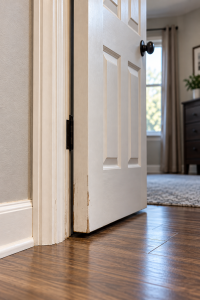
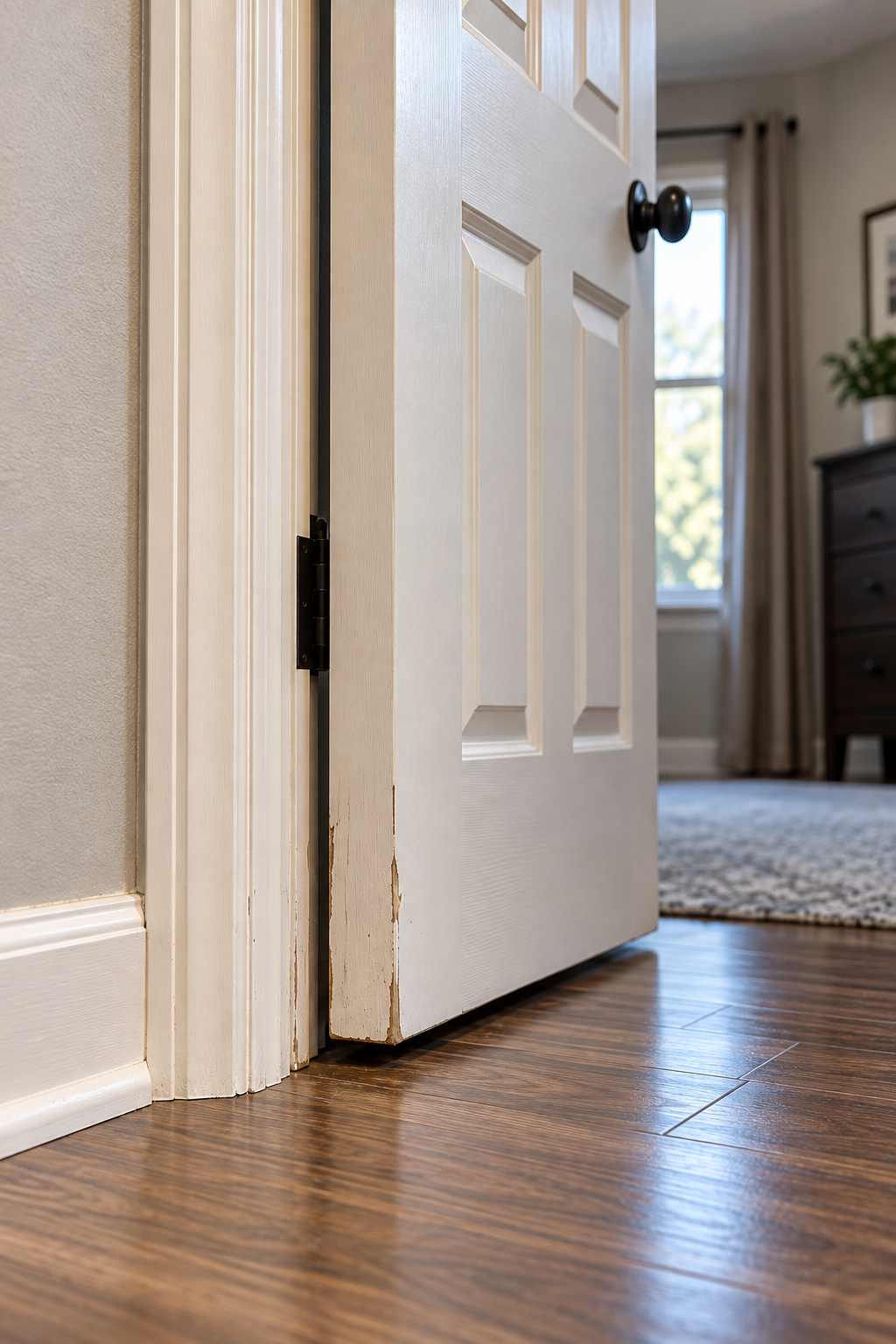
There are several reasons a door may become difficult to open or close. Some are relatively minor, while others may indicate a larger issue.
Loose or Worn Hinges
Doors are used repeatedly throughout the day, and over time, hinge screws can loosen. This may allow the door to sag slightly and rub against the jamb or floor.
Check whether the hinges appear loose and whether the screws are secure. If tightening a loose hinge restores the door to its proper position, the problem may simply have been related to the hardware.
However, a door that continues to move out of alignment after adjustments may deserve a closer look.
Humidity and Seasonal Changes
Wood naturally reacts to changes in moisture. During periods of high humidity, wooden doors and frames can absorb moisture and expand slightly.
This can cause a door that normally operates without a problem to rub against its frame.
Seasonal patterns can provide an important clue. A door that sticks during humid summer weather but operates normally during drier months may be reacting to changing moisture levels rather than structural movement.
Indoor moisture problems can contribute as well. A wet basement or other source of excess moisture may increase humidity inside the home.
If moisture is contributing to the problem, controlling the source of that moisture is more important than simply modifying the door.
A Warped Door or Damaged Frame
Sometimes the problem really is the door.
Wood can warp over time, and door frames can become damaged from wear, moisture, or previous repairs. Paint buildup around the edges of a door can also reduce the clearance between the door and frame.
These problems tend to remain localized to one door and generally aren’t accompanied by structural warning signs elsewhere in the home.
Changes in the Door Opening
A door itself may be perfectly fine while the opening around it has changed.
Foundation settlement or other structural movement can cause walls and frames to shift slightly out of square. Even a relatively small change in alignment can affect the clearance around a door.
You might notice that the door catches at one corner, no longer sits evenly inside the frame, or doesn’t line up with the latch the way it once did.
In this situation, repeatedly adjusting or trimming the door may address the symptom without identifying why the opening changed.
How Can Foundation Settlement Make Doors Stick?
Your foundation supports the structure above it. Ideally, that support remains relatively uniform.
However, soil conditions beneath and around a foundation can change over time. Soil may shrink, expand, erode, wash away, or become less capable of supporting portions of the structure. When one area of a foundation moves differently from another, the structure above can respond to that movement.
Door and window openings can be particularly noticeable places for homeowners to see these changes because they depend on relatively precise alignment.
Foundation-related movement may cause a door frame to become slightly distorted. As a result, you may notice:
- The top or bottom corner of the door rubbing against the frame
- A door that no longer latches properly
- Uneven gaps between the door and frame
- A door that swings open or closed without being pushed
- Increasing difficulty opening or closing the door
- Several doors developing similar problems
One sticking door isn’t enough to diagnose foundation trouble. A pattern of changes throughout the home provides much more useful information.
What Other Signs Should You Look For?
If you’re trying to determine why a door is sticking, take a look beyond the door itself.
Walk through your home and look for other changes that may have appeared around the same time.
Cracks Around Doors and Windows
Cracks extending from the corners of door and window openings can sometimes accompany structural movement. Pay particular attention to cracks that are new, growing, or appearing in several areas.
Drywall Cracks
Small cosmetic cracks can occur for many reasons. However, widening cracks, recurring cracks, or multiple cracks appearing throughout the home may warrant additional investigation.
Uneven or Sloping Floors
Floors that appear to slope, dip, or feel noticeably uneven may be another indication that movement has occurred beneath part of the structure.
Gaps Around Doors or Windows
Look at the spacing around the entire door. Does one side have a noticeably wider gap than the other? Does the top of the door appear angled compared with the frame?
Changes in these gaps can indicate that the opening is no longer square.
Multiple Sticking Doors or Windows
One problematic door may have a simple explanation. Several doors or windows becoming difficult to operate at approximately the same time can be more significant.
When the problem appears throughout one area of the house—or across several areas—it is worth looking for a common cause.
Foundation Cracks or Other Visible Movement
Visible cracks in the foundation, separation between building materials, or other changes around the exterior of the home can provide additional clues.
No single symptom confirms a foundation problem. The goal is to look at the overall pattern of changes occurring throughout the property.
Should You Fix a Sticking Door Yourself?
It depends on what is causing the problem.
Checking and tightening a loose hinge is a reasonable first step. If a door predictably sticks during humid weather, addressing indoor moisture may also help.
However, be cautious about immediately sanding, planing, or trimming a door simply because it has started rubbing against its frame.
Before permanently altering the door, ask yourself:
Why did the door stop fitting correctly in the first place?
If the door has always been slightly oversized or has obvious damage, adjustment may make sense. But if a door that previously worked properly has suddenly changed, modifying it could hide a symptom without addressing the underlying cause.
This is especially important when the sticking door is accompanied by cracks, uneven floors, changing gaps, or similar problems elsewhere in the home.
When Should You Have Your Foundation Evaluated?
A sticking door by itself isn’t necessarily cause for alarm. Homes and building materials naturally experience some changes over time.
However, consider having your foundation evaluated if:
- A door suddenly begins sticking without an obvious cause
- The problem continues to get worse
- Several doors or windows are affected
- Doors no longer latch or appear noticeably out of square
- You see new or growing cracks around doors and windows
- Floors have become uneven or sloped
- You notice foundation cracks or other signs of structural movement
A professional foundation evaluation can help determine whether the symptoms you’re seeing are related to the foundation or something less serious.
Don’t Just Fix the Door—Find Out Why It Is Sticking
If you’re wondering how to fix a sticking door, start by determining what’s causing it.
Sometimes the solution really is as simple as tightening a hinge or managing seasonal humidity. Other times, the door is providing an early clue that something elsewhere in the home has changed.
Rather than repeatedly adjusting a door that continues to stick, look for patterns. Check nearby walls, floors, windows, and other doors for changes. If multiple warning signs are present, a foundation evaluation can help you better understand what’s happening.
Rapid Foundation Repair helps homeowners identify foundation problems and determine appropriate repair solutions. If you’re concerned that sticking doors or other changes in your home may be related to foundation movement, contact Rapid Foundation Repair to schedule an evaluation.
Frequently Asked Questions About Sticking Doors
Can foundation settlement cause doors to stick?
Yes. Uneven foundation movement can affect the walls and door openings above the foundation. If a door frame shifts out of square, the door may rub against the frame, become difficult to close, or stop latching correctly. A sticking door alone does not confirm foundation settlement, so look for additional warning signs.
Why does my door stick only in the summer?
Higher humidity can cause wooden doors and frames to absorb moisture and expand. If a door consistently sticks during humid weather and returns to normal during drier conditions, seasonal moisture may be contributing to the problem.
Why are several doors in my house suddenly sticking?
Multiple doors developing problems around the same time can indicate that something is affecting a larger area of the home. Possible causes include moisture changes and structural movement. Check for cracks, uneven floors, changing gaps around doors and windows, and other signs that may help identify the cause.
Should I sand down a door that suddenly started sticking?
Not necessarily. Before permanently trimming or sanding a door, determine why it no longer fits correctly. If the door opening has shifted because of foundation or structural movement, sanding the door may temporarily hide the symptom without correcting the underlying issue.
Does a sticking door always mean foundation problems?
No. Loose hinges, humidity, warped wood, damaged frames, and other relatively minor problems can all cause doors to stick. Foundation concerns become more likely when sticking doors are new or worsening and occur alongside other signs of movement.
What foundation problems can cause sticking doors?
Uneven foundation settlement or movement can change the alignment of walls and door frames. Soil movement, erosion, changing moisture conditions, and inadequate support beneath portions of a foundation are among the conditions that can contribute to settlement. A professional evaluation is the best way to determine what is causing changes in a particular home.