




A Complete Guide to Cracks in Your Home
Whether it is in your ceiling or your basement floor, near a doorframe or in an exterior masonry wall, no one wants to see a crack forming in their home. Not all cracks, however, are created equal. Some are signs that your home has major structural problems while others are a cosmetic issue that only require a cosmetic fix.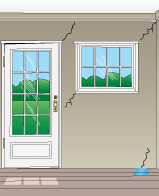
The question is, how do you tell them apart?
Although the only surefire way to tell if your home’s cracks are signs of deeper structural problems is to consult a professional, there are some general guidelines to watch for that can give you potential causes and likely severity.
How Big is the Crack? Is It Growing?
When it comes to crack sizes, smaller is, of course, always better. The key question is usually this: is it a hairline crack?
Hairline cracks are generally defined as being less than 1 mm in width and shallow, not extending deep into the concrete, plaster or drywall. The likely causes of hairline cracks vary by their location in the house but can range from minor settlement to ones that naturally occur when concrete or drywall dry.
These cracks usually aren’t signs of serious structural issues. Once cracks get wider than a millimeter, or when they extend deeper into the material, they become concerning. The larger they get, obviously, the more concerning it is.
Track Hairline Cracks
This isn’t to say, however, that you should ignore hairline cracks. Instead note them and periodically check to make sure they aren’t growing.
If a crack grows, that means the issue causing the crack is ongoing and often will need to be addressed.
What Direction Is the Crack Running?
What direction a wall crack is running can give you clues to its cause, and its severity.
Horizontal Cracks
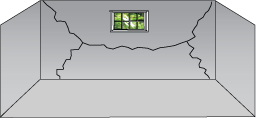 These cracks are generally the most concerning, and it is imperative that you get them checked out, especially if the crack is accompanied by bowing in the wall.
When you find horizontal cracks in basement or below-ground foundation walls, the likely culprit is in the soil surrounding them. Sometimes poor drainage can lead to water pooling in the soil around your foundation. Other times, the shrink-swell cycles of expansive clay soils are to blame. In still others, it is frost heave.
Regardless, the effect is the same. The soil exerts an increased amount of pressure inward against the basement wall. This pressure can lead to the wall beginning to crack under the stress and also bow inward at the crack point.
In cases like this, helical tiebacks or carbon fiber straps will likely be necessary to stabilize the walls and prevent further bowing.
If the cracks are in a main floor wall rather than in the basement, it could be a sign of foundation settlement-related issues placing the walls under stress. The wall might be unable to fully support the load placed upon it.
While there are other, less severe, potential causes as well, horizontal cracks should likely be inspected to check for serious issues.
Vertical Cracks
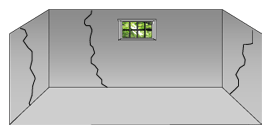 Vertical cracks are generally seen as less concerning than horizontal or diagonal cracks, but that doesn’t mean that they are always purely cosmetic.
Most homes undergo a small amount of settlement when new. This can lead to narrow, vertical cracks forming in walls. If the settlement never advances past “minor,” the cracks should remain small.
Other things that don’t pose structural issues could also cause vertical cracks in walls. For instance if the crack is along a drywall seam, it could be caused by foundation problems (cracks often form along the weakest point). It also, however, could be flaws in the installation of the drywall itself.
So what signs, other than the size of the crack, indicate vertical cracks are serious?
- The crack is wider at one end than the other. If your home is undergoing differential settlement, vertical cracks will often be wider at the top or the bottom. If one end of the house is settling more, the crack will often be wider at the top. If the middle is settling more, the crack will be wider at the bottom.
- Look for other signs of foundation problems. Are your doors or windows sticking? Are your floors uneven? If so, the chances that the cracks are structural are significantly higher.
- Cracks bunched together. Multiple vertical cracks in one portion of a wall, especially a foundation wall, is concerning even if none of the cracks would necessarily be problematic individually.
Diagonal or Stair-Step Cracks
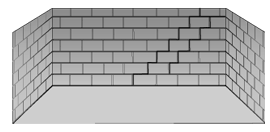 Stair-step and diagonal cracks are usually a sign that your home is experiencing differential foundation settlement, a frequent cause of foundation problems.
Diagonal cracks in concrete or plaster walls often start from a door or window frame (the weak point in the wall). In brick or cinder block walls, these types of cracks will follow the mortar joints in a stair-step pattern.
As with any crack, the larger the crack is, the more likely it is a significant problem. Also, watch out for cracks which suddenly change direction.
Where is the Crack Located?
We talked a lot about different kinds of wall cracks in the previous section, but what if the crack is located in the floor or ceiling?
Floor Cracks
Let’s start with cracks in basement slab floors. As with any concrete slab, some hairline cracking is fairly common as concrete dries. So long as the cracks don’t keep growing, and aren’t deep enough to allow water infiltration, they aren’t usually an issue.
Wider cracks, however, are caused by stresses on the concrete. Often, this comes in one of two forms: settlement or heaving. With differential settlement, the slab is placed under stress when its portions aren’t receiving the same support from the ground below, causing cracking.
With heaving, something, whether tree roots or expansive clay soil, pushes up on the slab, putting pressure on it from below. In either case, you should address the problem, if for no other reason than significant cracks in your basement are a good way to end up with a wet basement.
With cracks on other types of flooring, the possible causes vary significantly by type. Foundation settlement is a possibility as uneven settlement can lead to stressed, uneven floors. Compromised floor joists or portions of the subfloor are another possibility.
It also could be as simple as sometimes aging floor tiles crack.
A good rule of thumb is, if the cracking is serious and the cause isn’t readily apparent, consult a professional.
Ceiling cracks</h3>
Ceiling cracks often start either in a corner, near a fixture or along the drywall seams. While not always the case, cracks along drywall seams are often caused by problems with the installation of the drywall itself or the aging of the materials used.
Other than construction issues, there are several potential causes of ceiling cracks.</p>
The first is plumbing problems. Water from a leaking pipe or other issue can weaken the ceiling and cause it to crack. If a crack is wet, you probably have a plumbing problem, not a foundation one.
Cracks can also occur from the weight the ceiling supports above, especially if any of the ceiling joists have been compromised.
The third common cause is again differential settlement. Settlement throws everything in your house a bit out of alignment. This places all of the components under stress, including the ceiling. If you see a large ceiling crack, especially in conjunction with other signs of foundation problems, it is time to call a specialist for an inspection.
If You Are Concerned About Cracks in Your Home, Call Rapid Foundation Repair
Rapid Foundation Repair provides foundation repair, waterproofing, crawl space repair, and other services in South Dakota, eastern Wyoming, and northern Nebraska. Contact us today if you live in our service area and want a free foundation repair quote.