



What Is Underpinning?
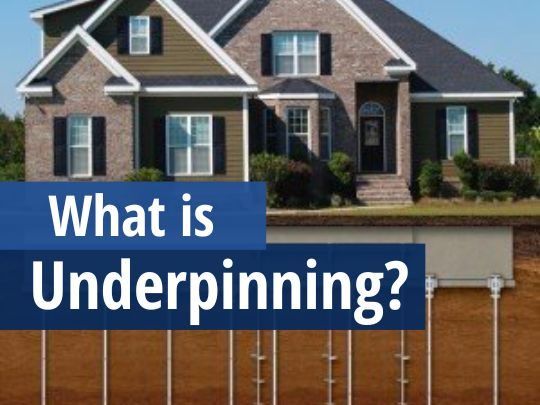
Underpinning is foundation repair work that adds support beneath or alongside an existing foundation to stop it from settling and, in many cases, lift it back toward level. It’s used on home foundations, crawl spaces, garage columns, chimneys, slabs, steps, and stoops. In the foundation repair industry, underpinning products are sometimes called “home-savers,” because they’re often what stands between a settling foundation and a much larger structural failure.
Rapid Foundation Repair installs underpinning systems for homeowners across South Dakota, Nebraska, and Wyoming, including for sinking and settling foundations and bowing or leaning foundation walls.
Signs Your Home May Need Underpinning
- Doors and windows that stick or won’t latch
- Sloped or uneven floors
- Large floor cracks, especially ones that run wall to wall
- Wall cracks, particularly horizontal cracks or stair-step patterns in brick or block
- A chimney or porch separating from the house
Any of these can point to foundation movement. An evaluation is the only way to know whether underpinning is the right fix, and which type.
Types of Underpinning
There isn’t one underpinning method that works for every foundation problem. The right one depends on what’s moving, why, and how much weight it needs to carry.
Helical Piers
Helical piers are steel shafts with helical plates that are screwed into the ground, resisting both tension and compression. They’re often used on lighter structures, such as a chimney that’s leaning due to settlement, where one or two piers can lift it back into place and hold it there long-term.
Wall Anchors
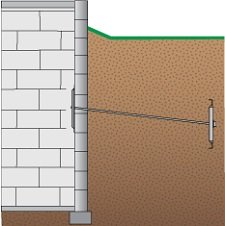
Wall Anchor
Wall anchors address a different problem: pressure from water or poorly compacted soil pushing against a foundation, crawl space, or retaining wall from the outside. A wall anchor system uses an interior wall plate, an anchor set out in stable soil, and a high-strength rod connecting them, and it can pull a leaning or bowing wall back toward its original position. They are economical, but still provide the lateral force needed to pull that wall back into place and add support.
Steel Push Piers
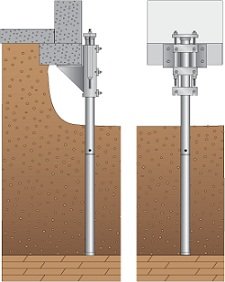
Steel Push Pier
Steel push piers, also called resistance piers or micro piles, are driven into the ground using the structure’s own weight as the driving force. They can be installed below or alongside the load that needs support. Each pier is load tested individually, which is part of why they’re one of the most widely used underpinning products for home foundations. We install push piers and other underpinning products from ECP.
Wall Tiebacks / Anchors
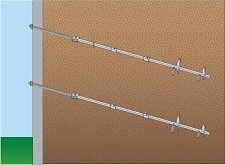
Wall Tiebacks / Anchors
Wall tiebacks are driven deep into stable soil around the home to add support where soil conditions are unstable. These are economical and safe underpinning products for your home and are widely used in the industry today. Installation is relatively simple and causes little disturbance to landscaping, which keeps both labor time and cost down.
Comparing Underpinning Methods
| Method | Best for | How it works |
|---|---|---|
| Helical piers | Chimneys, lighter structures, tension and compression loads | Screwed into the ground with helical plates |
| Steel push piers | Home foundations, heavier structures | Driven using the structure’s weight, load tested individually |
| Wall anchors | Bowing or leaning walls from outside soil/water pressure | Interior plate and exterior anchor connected by a rod |
| Wall tiebacks | Homes with unstable surrounding soil | Driven deep into stable soil around the foundation |
How We Decide Which Underpinning Method You Need
Every underpinning job starts with a free evaluation. A specialist looks at what’s moving, how much weight it carries, the soil conditions, and whether the pressure is coming from below, beside, or around the structure. From there, we recommend the underpinning method — or combination of methods — that fits the problem.
What Happens If You Don’t Underpin a Failing Foundation
Foundation problems don’t fix themselves, and they rarely stay the same size. A crack in a wall can become a bowing wall, and a bowing wall can eventually lead to structural failure. Underpinning early, while the damage is still limited, is generally far less invasive and less costly than waiting until the problem is severe.
Frequently Asked Questions About Underpinning
What is underpinning? Underpinning is the process of adding support beneath or beside a foundation to stop settlement and often lift the structure back toward level. It covers several different methods, including helical piers, steel push piers, wall anchors, and wall tiebacks.
What are the types of underpinning? The main types used in residential foundation repair are helical piers, steel push piers, wall anchors, and wall tiebacks. Each is suited to different problems, from a leaning chimney to a bowing basement wall.
How do I know if I need underpinning? Signs include sticking doors and windows, sloped floors, large wall-to-wall cracks, stair-step cracks in brick or block, and a chimney or porch separating from the house. A professional evaluation can confirm the cause and the right fix.
How much does underpinning cost? Cost varies by method, the number of piers or anchors needed, and site conditions. We provide free evaluations and estimates in South Dakota, Nebraska, and Wyoming.
Is underpinning the same as foundation repair? Underpinning is a category of foundation repair. It specifically refers to adding support to an existing foundation, as opposed to other repairs like drainage correction or crack sealing.
Talk to a Foundation Repair Specialist
If you’re seeing signs of foundation settlement, the right underpinning method can stop it from getting worse and often lift your home back toward level. Rapid Foundation Repair provides free evaluations and estimates across South Dakota, Nebraska, and Wyoming. Call today or request your free estimate.