




When winter arrives in South Dakota, Wyoming, and Nebraska, homeowners prepare for freezing temperatures, snow, and icy conditions. But while you’re busy keeping your home warm, there’s another important area worth paying attention to: your foundation.
Cold weather doesn’t automatically mean foundation damage. However, freezing temperatures, changing soil moisture, and seasonal thawing can affect the ground supporting your home. Under certain conditions, these changes can contribute to foundation movement, cracks, and other structural concerns.
Understanding how winter weather affects your foundation can help you recognize warning signs early and take practical steps to protect your home.
How Does Cold Weather Affect Your Foundation?
Your home’s foundation relies on the surrounding and underlying soil for support. During winter, that soil can experience significant changes as temperatures drop below freezing and eventually rise again.
Two of the most important processes are frost heave and soil thawing.
Frost heave occurs when moisture in certain types of soil freezes and forms growing layers of ice. This can push the surrounding ground upward, potentially placing stress on concrete slabs and foundation components.
When frozen soil thaws, excess moisture may temporarily weaken its ability to support weight. Depending on the soil conditions and foundation design, this can contribute to settlement or movement.
Not every home experiences these problems. Properly designed foundations account for local soil and frost conditions, and many foundation footings are constructed below the expected frost depth to reduce the risk of frost-related movement.
However, drainage problems, changing soil conditions, or inadequate support can increase the likelihood of foundation concerns.
What Is Frost Heave, and Why Does It Matter?
Frost heave is one of the most common soil-related concerns associated with freezing weather.
For significant frost heave to develop, three conditions generally need to be present:
- Freezing temperatures: The ground must become cold enough for water within the soil to freeze.
- Available moisture: Water must be present to contribute to the formation and growth of ice within the soil.
- Frost-susceptible soil: Certain soil types, particularly those containing fine particles such as silt, are more susceptible to frost heave.
As ice forms and grows within the soil, it can push the ground upward. If this movement occurs unevenly, it may place stress on nearby foundation components.
Frost heave can affect concrete slabs, steps, porches, and certain shallow foundations. In some situations, it may contribute to cracking or changes in the alignment of structural components.
The severity depends on the soil type, moisture conditions, frost depth, and how the foundation was constructed.
What Happens to Your Foundation When Frozen Ground Thaws?
While freezing temperatures often get the most attention, the thawing process can also create challenges.
When temperatures begin to rise, frozen ground gradually thaws. As ice within the soil melts, moisture levels can increase, and certain soils may temporarily lose some of their supporting strength.
If the ground beneath part of a structure becomes unstable, uneven settlement may occur.
Spring snowmelt can create additional concerns. When melting snow produces more water than the surrounding soil can absorb or drain, moisture may accumulate near foundation walls.
This can contribute to problems such as:
- Water seepage through foundation cracks or joints
- Increased pressure against basement walls
- Damp basements or crawl spaces
- Erosion around the foundation
- Soil movement or settlement in susceptible areas
Water accumulation doesn’t always lead to structural damage, but persistent moisture problems should be addressed.
Homeowners can learn more about the relationship between ground conditions and structural movement in our article, How Soil Affects Your Home’s Foundation.
Can Freezing Temperatures Damage Concrete Foundations?
Cold weather can affect concrete, but it’s important to distinguish between damage to the concrete itself and movement of the soil supporting it.
Concrete is a durable building material, but repeated freezing and thawing can contribute to deterioration when moisture enters its pores or existing cracks. The severity depends on the concrete’s condition, moisture exposure, and how it was originally designed and constructed.
Meanwhile, movement in the surrounding or underlying soil can place stress on an otherwise sound concrete foundation.
These are different problems and may require different solutions.
For homeowners, the most important step is recognizing changes and determining whether they are cosmetic, moisture-related, or signs of structural movement.
Common Warning Signs of Winter Foundation Problems
Some foundation symptoms develop gradually, while others become more noticeable following seasonal temperature changes.
Here are several warning signs homeowners should pay attention to throughout the winter and early spring.
1. New or Widening Foundation Cracks
Cracks can develop for several reasons, including normal concrete shrinkage, settlement, and structural movement.
Small, stable hairline cracks aren’t always cause for concern. However, cracks that continue to widen, develop suddenly, or appear alongside other signs of movement deserve professional attention.
2. Sticking Doors and Windows
Have you noticed that doors or windows no longer open and close as easily as they once did?
Seasonal humidity changes can affect doors and window frames, but foundation movement can also cause openings to shift out of alignment.
If sticking doors or windows appear alongside wall cracks or uneven floors, it may be worth investigating further.
3. Uneven or Sloping Floors
Changes in the support beneath a home can sometimes contribute to uneven floors.
If a floor begins to slope noticeably, develops new gaps near walls, or feels different underfoot, a foundation evaluation may help identify the cause.
4. Bowing or Leaning Basement Walls
Moisture-saturated soil can create additional pressure against basement walls.
Over time, excessive lateral pressure may contribute to horizontal cracks, inward bowing, or leaning walls.
Because significant wall movement can become a structural safety concern, these symptoms should be evaluated promptly.
5. Basement Moisture or Water Seepage
Melting snow, poor drainage, and changing ground conditions can allow water to accumulate around a home’s foundation.
Watch for damp basement walls, water stains, puddles, or moisture entering through existing cracks.
Even when moisture doesn’t indicate structural damage, persistent water intrusion can create additional problems that deserve attention.
How Can You Help Protect Your Foundation During Winter?
You can’t control winter temperatures, but a few preventative steps can help reduce avoidable moisture-related foundation problems.
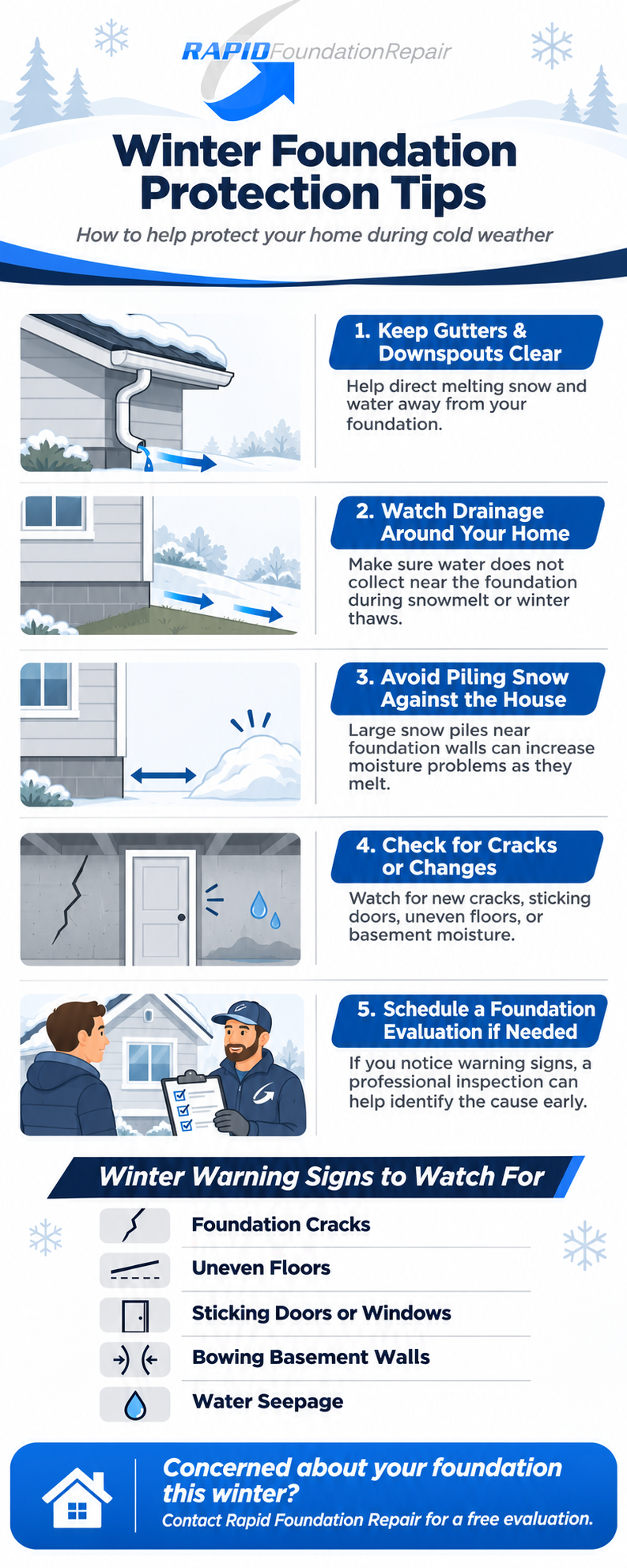
1. Keep gutters and downspouts working properly.
Clear debris before freezing weather arrives and check for drainage problems when conditions permit. Downspouts should direct water away from the foundation rather than allowing it to collect near the house.
2. Pay attention to grading and drainage.
The ground around your home should encourage surface water to move away from the foundation. Watch for low spots where water collects during warmer winter days or spring thawing.
3. Watch where snow accumulates.
Large snow piles near foundation walls can contribute to moisture problems as temperatures rise. When practical and safe, avoid directing additional snowmelt toward the house.
4. Inspect your foundation periodically.
Take a walk around your home and check accessible foundation walls, basement areas, and crawl spaces for visible changes. Documenting cracks or other symptoms with photographs can help you track whether conditions are changing.
5. Address drainage and moisture problems early.
If you regularly notice water collecting near your home or entering your basement, consider having the source evaluated. Correcting drainage problems can help reduce the moisture conditions that contribute to some foundation issues.
These measures won’t prevent every type of foundation movement, but they can be helpful parts of routine home maintenance.
When Should You Contact a Foundation Repair Professional?
Not every crack or seasonal change indicates a serious foundation problem. However, some warning signs shouldn’t be ignored.
If you’re noticing widening cracks, significant floor movement, bowing basement walls, or multiple symptoms appearing together, a professional evaluation can help determine what’s happening.
The appropriate solution depends on the cause and extent of the problem.
For example, when a foundation is settling because the underlying soil can no longer provide adequate support, structural systems such as helical piers or steel push piers may be recommended.
When basement walls are experiencing excessive lateral pressure, solutions such as wall anchors or other structural reinforcement systems may be appropriate.
For homes experiencing water intrusion, addressing drainage or basement waterproofing may be an important part of the solution.
Because every home and foundation is different, an accurate assessment is essential before choosing a repair method.
Frequently Asked Questions About Winter Foundation Problems
Freezing temperatures can contribute to foundation cracking under certain conditions. Frost heave, changing soil support, and moisture-related concrete deterioration are possible factors. However, not every crack is caused by cold weather or represents structural damage.
It can, but settlement isn’t inevitable. Some soils temporarily lose strength as they thaw, especially when excess moisture is present. Whether this affects a foundation depends on the soil conditions, construction, and existing support.
Some foundation repair methods can be performed during colder months, depending on the type of work, ground conditions, weather, and site accessibility. A foundation repair professional can determine which options are practical for your property.
Not necessarily. If you’re seeing significant cracking, bowing walls, noticeable settlement, or other concerning structural changes, it’s better to have the issue evaluated rather than automatically waiting for warmer weather.
Protect Your Home’s Foundation Through Every Season
Winter weather is a normal part of life in South Dakota, Wyoming, and Nebraska. While freezing temperatures and seasonal soil changes can affect foundations, understanding the warning signs can help homeowners make informed decisions about protecting their properties.
At Rapid Foundation Repair, we specialize in identifying and addressing foundation settlement, structural wall movement, and moisture-related foundation concerns.
Our team provides foundation repair solutions throughout South Dakota and portions of Wyoming and Nebraska, helping homeowners understand their options and find appropriate solutions.
Noticing foundation cracks, uneven floors, or other signs of movement? Contact Rapid Foundation Repair today to schedule your free foundation evaluation.